Blog

Looking Toward a More Equitable Justice System: The Importance of Accessible Design for Correctional Facilities

SWA’s Accessibility Team has extensive experience with justice facilities across the United States, from auditing existing jails and prisons to our work on new corrections facility projects. Our consultants have faced complicated questions concerning how the U.S. justice system impacts people with disabilities. Ensuring that these facilities are designed to uphold the rights and dignity of all individuals within them is essential.

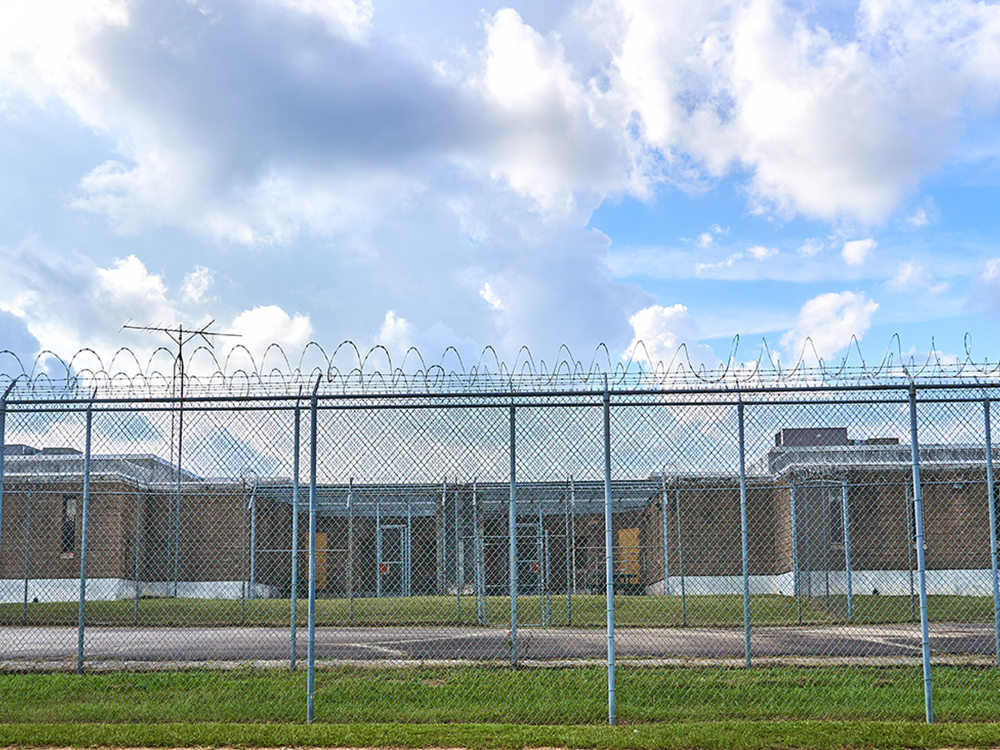
Single‑story detention center surrounded by a chain‑link fence topped with barbed wire, under a partly cloudy sky.

Incarceration. It is a big topic with many facets that evoke a myriad of complex feelings and reactions. Designing and constructing justice facilities requires navigating these complexities and considering how these facilities will impact people in custody, staff, visitors, and the community as a whole.

The U.S. Justice System and Accessibility: How We Got Here

Since the earliest civilizations, forms of incarceration have existed to maintain social order and ensure that justice is served. Across history, the methods employed in the pursuit of that justice have varied greatly, from Mesopotamian, Ancient Chinese, and Ancient Romans societies1 to the varied practices utilized today throughout Europe and the United States.

While the modern European criminal justice system focuses on rehabilitation, smooth reintegration into society, and humane treatment, United States prisons are built on the goals of custody and order.

This can be seen in the physical buildings that house people who are incarcerated. The goals of the U.S. system can lead to conditions that create long-term mental health problems and can be traced to the percentage of recidivism amongst inmates.2,3

The Bureau of Justice Statistics of the U.S. Department of Justice (DOJ) reported that an estimated 5.5 million people were under the supervision of adult correctional systems by the end of 2023. The adult correctional system includes people incarcerated in prisons and jails and people supervised in the community on probation and parole. Nationwide, approximately 1 in 48 adult U.S. residents was under some form of correctional supervision,4 with 1 in 61 adult U.S. residents incarcerated in jails or prisons.5

Disability Demographics Across the Justice System

When digging deeper into the demographics of the criminal justice system, the figures regarding disability are staggering.

As documented in The Prison Policy Initiative’s extensive library of research on disability issues in the criminal justice system, “people with disabilities are overrepresented at all stages…from jail and prison to probation and parole. Compared to 15% of the U.S. general population, 40% of people in state prisons have a disability.”6

About 1 in 4 incarcerated people are impacted by cognitive disabilities like autism, Down syndrome, or learning disorders. Visual, hearing, and ambulatory disabilities are also overrepresented. Individuals with disabilities are often overlooked and subject to inhumane treatment.6

With so many people with disabilities in the correctional system, systemic issues of abuse and neglect are further amplified, especially with the prevalence of overcrowding, deteriorating facilities, staff shortages, and lack of training and transparency.7 8

Enforcement of the Americans with Disabilities Act (ADA)

Within the first 9 months of the Americans with Disabilities Act (ADA) being in effect (1992), the DOJ received 272 complaints for alleged violations of the law. After employment-related complaints, the most frequent type of complaint concerned lack of accessibility to facilities or programs in courthouses and prisons.9

The DOJ enforces Title II of the ADA, which covers state and local governments. These entities are responsible for the operation or management of juvenile and adult jails, detention and correctional facilities, and community correctional facilities, whether they are operated directly by the state or local government or through contracts, licenses, or other arrangements with other entities (§35.151(k) and §35.152). The regulations prohibit discrimination against inmates with disabilities and require that qualified individuals with disabilities have equal access to all programs, services, and activities, including healthcare, housing, and education.

Unfortunately, there are harrowing accounts of how incarcerated people with disabilities face barriers on many fronts:8,9

  • physical (inaccessible cells and bathing facilities)
  • operational (access to interpreters or other auxiliary aids and services), and
  • medical (denial of mobility aids and medication for disability-related conditions)

Often, inmates with disabilities are moved to solitary confinement, not because they did anything wrong, but because facilities cannot accommodate mobility or sensory disabilities in general population. Placing people in solitary confinement results in little or no human interaction and restricts access to light, rehabilitative programming, and constructive activity.

Current Conditions for People with Disabilities

As part of a national investigation conducted by the American Civil Liberties Union in 2015, current and formerly incarcerated people with disabilities reported…

…enduring extreme isolation for days, months, and even years. They shared the pain and humiliation of being left to fend for themselves in solitary confinement without wheelchairs, prosthetic limbs, or other necessary accommodations to carry out life’s basic daily tasks. Without these vital accommodations, many of them were left without the means to walk, shower, clothe themselves, or even use the toilet. Deaf and blind prisoners reported that prison officials failed to provide them with access to hearing aids, Braille materials, certified sign language interpreters, or other auxiliary aids and services that are necessary to facilitate meaningful communications. As a result, many prisoners reported being left completely isolated without any ability to communicate with other prisoners, staff, family members, and other visitors.8

When held in cells for upwards of 22 hours per day, inmates are denied equal access to prison programs and services, such as medical and mental healthcare, educational and vocational classes, visitation, telephone calls, and exercise yards. These are critical programs and services that promote rehabilitation and reintegration into society.8

The nation is facing an epidemic of loneliness and isolation, and there are major detrimental health outcomes that are exacerbated in an already vulnerable population.10 Consider the, frankly, sobering reality: nearly 50% of all suicides by incarcerated people are completed in solitary confinement.8

Justice System, Accessibility, and Equity: Where Do We Go from Here?

Conditions in modern correctional facilities are systemic and negatively impact all occupants, including inmates, staff, corrections officers, visitors, and community members. We must do better.

Justice System Reform through Litigation

Historically, failures to accommodate incarcerated people with disabilities, as required under the ADA, have been addressed through lawsuits.

One example of litigation driving system-wide reform in existing facilities is Disability Rights Florida, Inc. v. Jones (4:16-cv-00047), filed against the Florida Department of Corrections system in 2016.

Plaintiffs alleged that deaf, blind, and mobility-impaired prisoners were routinely denied assistive devices, accessible facilities, and equal access to programs such as education, work assignments, and recreation. They also cited inadequate staff training, poor systems for identifying prisoners with disabilities, and barriers to communication and participation in prison services.

The case was settled in 2017 through a system-wide reform agreement requiring the implementation of comprehensive ADA-compliant policies across its prisons.

These reforms include providing communication aids for deaf and hard-of-hearing prisoners (such as interpreters and captioned phones), assistive devices for visually impaired prisoners, accessible housing and infrastructure for mobility-impaired individuals, equal access to prison programs, and mandatory staff training on disability accommodations.11

Justice System Reform through Design

Looking forward, architects and builders are working to spark reforms in the design and construction of new courthouses, jails, and correctional facilities. There is an increased focus on design principles that foster humane and healthy environments, moving toward a safer and more equitable justice system.

One example of these design principles in action is New York City’s commitment to replace Rikers Island with four smaller borough-based jails in Brooklyn, Manhattan, Queens, and the Bronx.

Rikers has often been cited in the news for the high rates of violence, suicides, and dangerous conditions for both persons-in-custody and staff, which the borough-based jail program hopes to mitigate.

A Closer Look: New York City’s New Borough-Based Jail Program

The design strategy for this program centers on creating a smaller, safer, and fairer jail system by drastically reducing overall jail capacity and locating facilities closer to courts, families, and community services. By placing jails within boroughs and near courthouses, the plan aims to improve access to attorneys, visitation, medical care, and social services while reducing transportation time and strengthening community connections that support rehabilitation and reentry.

Architecturally, the facilities are designed using humane justice design principles, pulling from best practices in European correctional facilities, as well as American hospitals and academic facilities.

Accessibility is part of the basis-of-design and integrated into every aspect: housing, healthcare, visitation, and programming.

The emphasis on creating welcoming, trauma-informed spaces and design elements that reduce the institutional character of traditional jails fosters better physical and mental wellbeing for all occupants.

Architecture firm HOK is applying its “Justice and Dignity by Design” philosophy to New York City’s borough-based jail projects.

Below are some of the key design principles implemented by the design team:12

1. Smaller, Direct-Supervision Housing Units

Instead of large dormitory blocks typical of older jails, the new facilities use smaller housing units (often ~30-40 people) organized around a central common area; like units found in inpatient behavioral health facilities. Staff supervise directly from inside the housing unit rather than from remote control booths. This design improves visibility, reduces violence, and promotes more normalized daily interaction between staff and persons-in-custody.

2. Access to Natural Light and Outdoor Space

The buildings prioritize large windows, higher ceiling heights, and accessible outdoor recreation areas. Increased daylight, views, and fresh air are intended to improve mental health, reduce stress, and create a more humane environment compared with older jail designs that rely heavily on artificial lighting and sealed cells.

3. Integrated Health and Mental Health Facilities

Given the high proportion of persons in custody with behavioral health needs, the designs include expanded clinical spaces, such as medical exam rooms, mental-health treatment suites, crisis stabilization units, and therapeutic programming areas. These spaces are embedded within housing areas rather than isolated elsewhere in the building.

4. Program-Centered Layouts

Education, job training, counseling, and reentry services are designed into the daily circulation of the jail, rather than being separate destinations that require escorting people across the facility. Classrooms, multipurpose spaces, and program rooms are located near housing units to increase participation and reduce physical and security barriers to programming.

5. Civic-Scale Urban Integration

Unlike the remote complex on Rikers Island, the new facilities are located within neighborhoods in New York City near courthouses and transit. Designs include transparent ground floors, community-facing uses, public plazas, and contextual building forms so the buildings function as civic infrastructure rather than isolated carceral compounds.

Looking Toward a More Equitable Justice System: How Do We Keep Making Progress?

In both existing and newly constructed correctional facilities, the rights of individuals with disabilities are protected by civil rights laws like the ADA.

At SWA, we recognize that the justice system is complex and multifaceted, and that both architectural and operational decisions influence how justice is experienced and implemented.

For this reason, we believe it is essential that we contribute to the conversation and apply our expertise to help improve aspects of the system.

Meaningful progress will require collaboration among experts across disciplines, supported by thoughtful policies that advance the goals of human dignity and rehabilitation. Courthouses, jails, and correctional facilities are integral parts of the built environment, and they must be designed with care and intention to uphold the rights and dignity of all individuals within them.

Please reach out if you’d like to work with us.

Author: Jennifer Low, Senior Accessibility Consultant at SWA

Footnotes:
  1. Ancient Origins – Prisons and Imprisonment in the Ancient World: Punishments Used to Maintain Public Order ↩︎
  2. Western Michigan University University Libraries – Recidivism Rates in the United States versus Europe: How and Why are they Different? ↩︎
  3. Vera Institute of Justice – Sentencing and Prison Practices in Germany and the Netherlands: Implications for the United States [PDF] ↩︎
  4. U.S. Department of Justice Office of Justice Programs Bureau of Justice Statistics – Correctional Populations in the United States, 2023 – Statistical Tables [PDF] ↩︎
  5. Prison Policy Initiative – Punishment Beyond Prisons 2023: Incarceration and supervision by state ↩︎
  6. Prison Policy Initiative – Disability: Research on the prevalence of, and challenges faced by, people with disabilities in the criminal legal system ↩︎
  7. Corrections1 – New York prison strikes reveal a national staffing crisis ↩︎
  8. American Civil Liberties Union (ACLU) – Caged In: Solitary Confinement’s Devastating Harm on Prisoners with Physical Disabilities [PDF] ↩︎
  9. National Institute of Justice (NIJ) – American With Disabilities Act and Criminal Justice: Providing Inmate Services ↩︎
  10. Our Epidemic of Loneliness and Isolation: The U.S. Surgeon General’s Advisory on the Healing Effects of Social Connection and Community [PDF] ↩︎
  11. Case: Disability Rights Florida v. Jones ↩︎
  12. City of New York – NYC Borough-Based Facilities ↩︎